26 November
In collaboration with Sudut Kantin Project as media partner, this column and webpage will publish regular dispatches chronicling the Jalan Raya Pos Project—rolled out by In-progress Initiatives and its collaborators from Jember to Bandung—bringing you the latest updates straight from the road
From Desa Bhinor in Paiton, we moved onward to Surabaya, the sprawling capital of East Java and Indonesia’s second-largest city. On the journey from Paiton toward Surabaya, we encountered several aging colonial-era structures dating back to the mid-to-late nineteenth century—buildings that Bernie IJdis had previously captured during his 1993–1994 artistic research trip. Among them were the former administrative buildings of the Besuki Residency and a number of residences showcasing distinctive late-nineteenth-century colonial architecture. Bernie IJdis unmistakably passed through Paiton both during the filming of Jalan Raya Pos and throughout his preliminary visual research before production began, at the exact moment this coastal stretch was being reshaped.
Paiton is a coastal district in Probolinggo Regency, East Java, best known as the site of the Paiton Steam Power Plant (PLTU Paiton)—one of the largest coal-fired power generation complexes in Southeast Asia. Built during the late 1980s and completed in 1994 under the authoritarian New Order regime of President Suharto, its construction required massive state-backed land acquisitions and the displacement of coastal farming and fishing communities. Notably, the project rerouted public traffic onto a new bypass, swallowing the original 19th-century colonial Jalan Raya Pos (Great Post Road) directly into the restricted industrial compound.
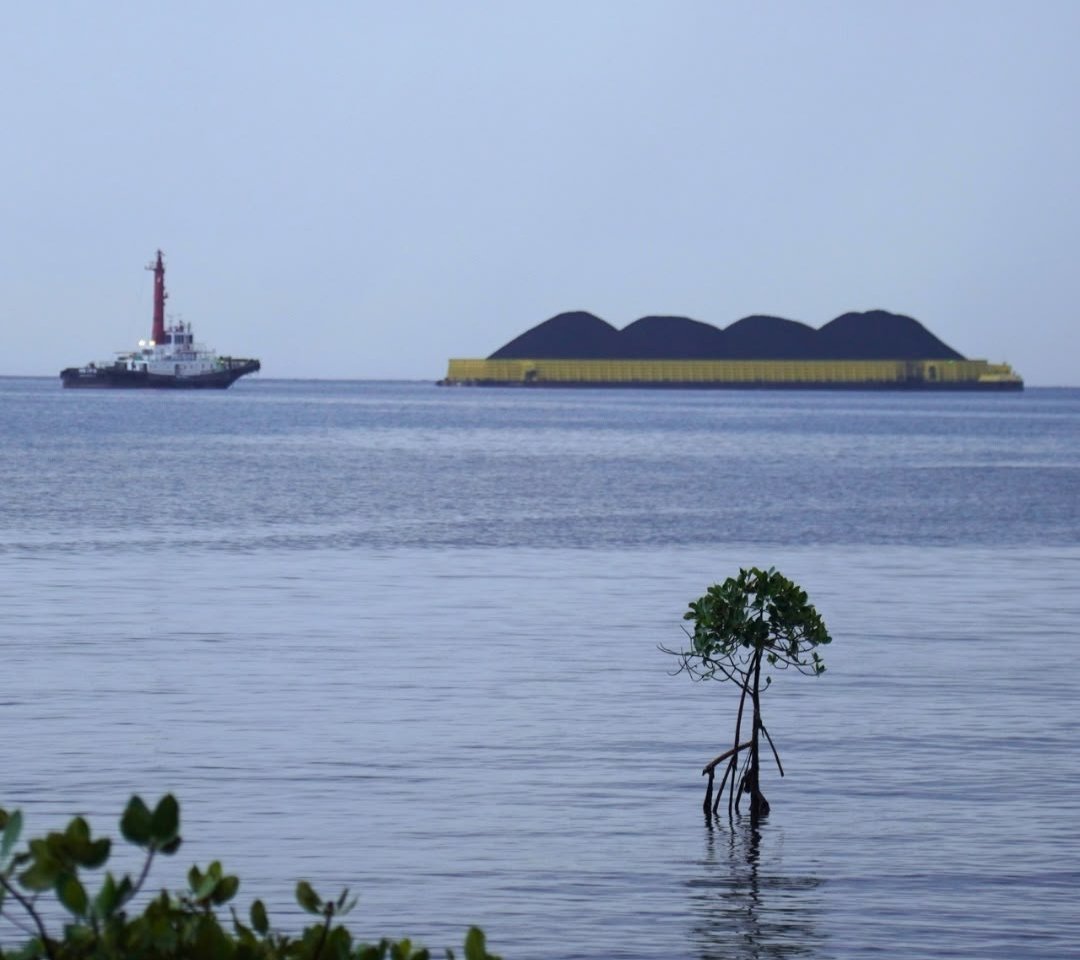
Sitting right on the Java Sea, Paiton acts as the extractive engine powering the Java–Madura–Bali electrical grid. Visually defined by towering smokestacks, mountains of imported coal, and offshore barges, it symbolizes the direct continuity between nineteenth-century colonial resource extraction and today’s state-corporate industrialization—as well as the ongoing environmental crisis for surrounding villages.
Yet this massive energy output does not remain where it is generated; instead, it is funneled directly westward along the transmission lines and logistic arteries of the Great Post Road toward Java’s major industrial and commercial centers, foremost among them Surabaya. As East Java’s sprawling capital and Indonesia’s second-largest metropolis, Surabaya relies on the raw power and material flow extracted from coastal peripheries like Paiton to sustain its factories, port logistics, and relentless urban sprawl—making the two sites inseparable poles of a single infrastructural circuit linking rural extraction to metropolitan consumption.
On Sunday evening, November 22, we arrived at Studi Gangguan in Surabaya, an independent cultural hub where various grassroots communities gather and exchange ideas. Studi Gangguan serves as a space of convergence for diverse collective and individual research initiatives—spanning 1950s literary and performance archives, Indonesian leftist movements, collective memory and urban landscapes, and Arekan subcultures (the distinct, egalitarian, and fiercely expressive working-class cultural identity native to Surabaya and its surroundings).
The next morning, we installed and rearranged the artworks inside our truck. Unlike our previous two stops, Surabaya confronted us with tight spatial constraints for parking the vehicle and setting up the exhibition—a condition that strangely and accurately underscored the dense urban landscape of the city itself. Together with our Surabaya collaborators, we agreed to install a portion of the works inside Rumah Gangguan while keeping one side panel of the truck open in the courtyard.
Overcast skies did nothing to relieve the oppressive heat pressing down on us. That same stifling heat prompted us to collectively shift the screening of Bernie IJdis’s 1996 documentary de Groote Postweg (The Great Post Road) from late afternoon to around 7:00 PM. Adjustments like this have happened more than once. We intentionally loosened our event programming structure; confronting a 1,600-kilometer itinerant project means staying unconditionally open to contingencies on the ground, and Surabaya’s punishing climate is simply part of that terrain.
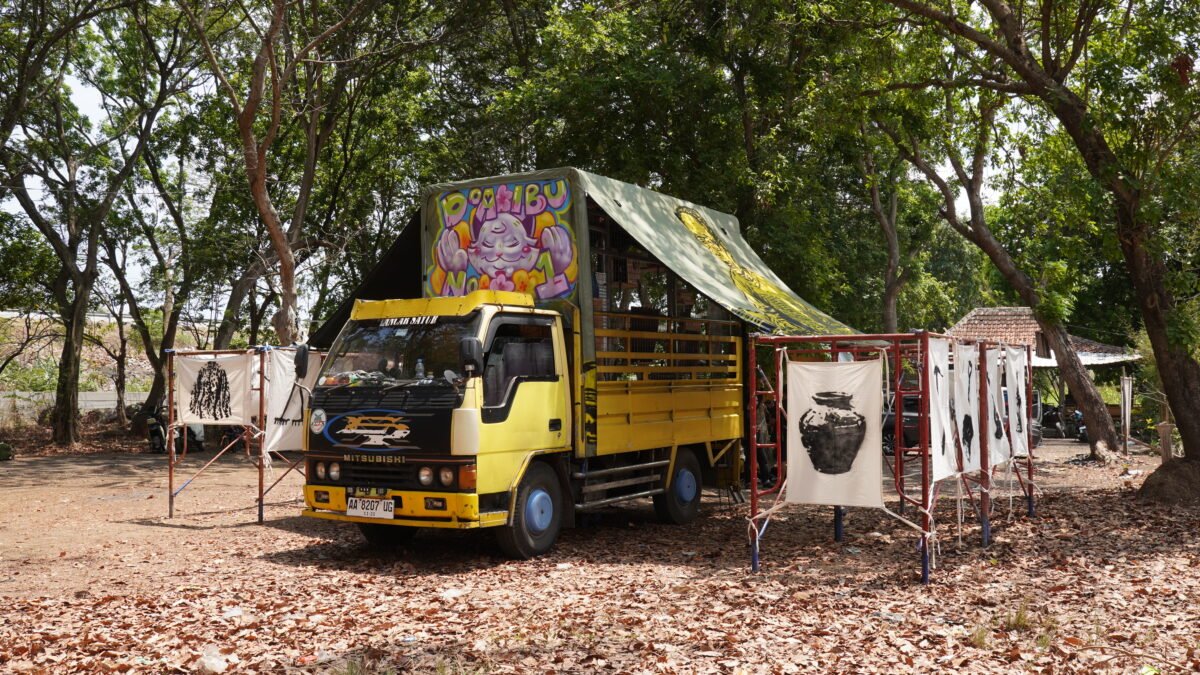
Once parked, the truck swiftly transformed into a temporary archival exhibition space. The vehicle is driven by two resilient drivers: Pakdhe Hadi and his son, Aji. With over three decades of experience on the road, both drivers have become vital narrators of knowledge throughout the Jalan Raya Pos Project—embodied road wisdom that we continuously absorb as they steer, chart paths, and navigate the realities of this route.
Inside the truck that had traveled all the way from Jember to Paiton, visitors began arriving one by one. Just before sunset, they rotated in and out of the truck bed and viewed the installations inside the house while waiting for the screening. Book pages were flipped through. Photographs, the archival installations, the truck itself, and the monumental stenciled portrait of author Pramoedya Ananta Toer by the Yogyakarta-based printmaking artist Media Legal immediately captured their attention.
Following the film screening, we held a concise, dense reflection and discussion on de Groote Postweg. Between sessions, we ran a live screen-printing activation for t-shirts and tote bags featuring the figure of colonial Governor-General Herman Willem Daendels—appropriated from Indonesian modern painting pioneer Raden Saleh’s circa 1838 portrait—but reimagined with the face of “Wowo” (a satirical vernacular nickname for Indonesia’s current president, Prabowo Subianto): an archival intervention reflecting the contours of today authoritarianism.
In Bernie IJdis’s research travel logs, the areas of Surabaya he traversed stretched from the historic port district of Krembangan into downtown Surabaya before moving south toward Sidokare in the neighboring regency of Sidoarjo. These areas are all threaded together by the Great Post Road, transcending mere administrative boundaries of cities or regencies—forming a spatial expanse that seems to perpetually define itself. IJdis’s archive led us to re-examine the discursive formations surrounding spatial history and landscapes of coloniality.
While the archives of Bernie IJdis and Pramoedya Ananta Toer form the narrative backbone of this project, treating an archive merely as a passive collection accessible only to researchers and historians immediately strips it of its “second life”—a life that circulates back and forth alongside the living memory of the people. Instead, IJdis and Pramoedya’s archives invite the people and exhibition audiences to respond, enter into dialogue, and collectively reassemble memories along the Great Post Road.
Unlike conventional archival exhibitions or retrospective programs in mainstream art events, the Jalan Raya Pos Project positions the archive as a spark and an entry point to weave collective memories and narratives grounded in the everyday living spaces of ordinary people. If Pramoedya or Bernie were still creating work today in 2026, we believe they would be telling stories about the wheels of heavy tronton freight trucks, coal barges looming off the northern coast of Java, pushcarts driven forward by sheer exhaustion, or the truck drivers staking their livelihoods on the Great Post Road.
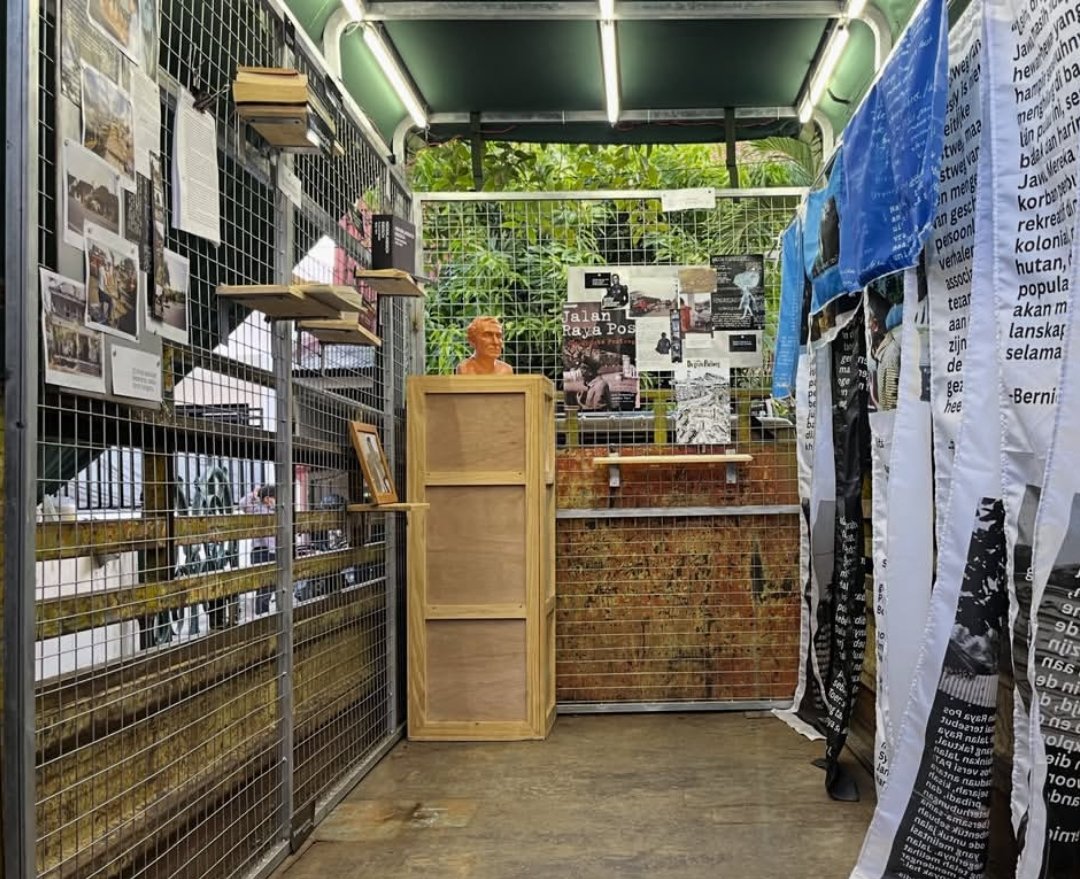
Perhaps the most fitting way to honor Bernie IJdis and Pramoedya Ananta Toer along the Great Post Road is precisely by bringing the history of their work face-to-face with today’s landscape—with the fragmented memories of the people, and with resourceful young people who relentlessly swim through the swirling currents of cultural production.
[ID]
Rute Ingatan, Rute Ekstraksi: Jalan Raya Pos dari Paiton ke Surabaya.
Dari Desa Bhinor di Paiton, kami bergerak menuju Surabaya. Dari lanskap PLTU Paiton, dengan tongkang batubara dan tronton—menjadi lanskap padat pemukiman di Surabaya. Hanya di Paiton, kami berjumpa dengan anak-anak Sekolah Dasar yang berangkat sekolah dengan motor listrik, beriringan dengan truk-truk dan roda super besarnya di tengah Jalan Raya Pos. Jalanan panas penuh truk industri itu berubah menuju kota megah, di mana energi dan roda ekonominya disokong oleh kecepatan mesin-mesin raksasa mengolah sumber daya alam dan komoditas mentah.
Minggu malam, pada 22 November kami tiba di Rumah Studi Gangguan: sebuah cultural hub tempat beberapa komunitas berkumpul dan bertukar pikiran. Studi Gangguan menjadi ruang pembauran dari berbagai riset kolektif dan individu, tentang arsip sastra dan pertunjukan periode 1950-an, gerakan kiri, memori kolektif dan lanskap urban, subkultur Arekan, dan sebagainya.
Pagi hari esoknya, kami menginstal dan menata ulang karya di dalam truk. Berbeda dari dua pemberhentian sebelumnya, di Surabaya kami berhadapan dengan keterbatasan ruang parkir truk dan penginstalan karya; kondisi yang secara aneh menggarisbawahi dengan baik lanskap urban Surabaya itu sendiri. Bersama kawan-kawan Surabaya kami kemudian bersepakat untuk menginstal sebagian karya di dalam Rumah Gangguan, selagi tetap membuka salah satu sisi layar truk di halamannya.
Cuaca mendung tidak mengurangi rasa panas yang menimpa kami. Panas yang sama kemudian menjadi pertimbangan kami bersama untuk menggeser jadwal pemutaran film “de Groote Postweg” yang semula dijadwalkan sore hari menjadi malam sekitar jam tujuh malam. Kejadian semacam ini tidak sekali dua terjadi. Kami menyengajakan diri untuk melonggarkan desain penyelenggaraan acara. Sebab, sejak kami berhadapan dengan projek sepanjang 1.600 km kesediaan membuka diri pada berbagai kemungkinan di lapangan adalah pasti belaka, dan suhu Kota Surabaya adalah sebagian dari hal tersebut.
Truk yang diparkir, segera berubah menjadi ruang sementara pameran arsip. Truk ini disopiri oleh dua orang sopir yang tangguh, yang pertama adalah Pakdhe Hadi dan anaknya Aji. Dengan pengalaman lebih dari tiga dekade di jalanan, melalui Proyek Jalan Raya Pos ini kedua sopir truk menjadi penutur pengetahuan yang kami serap segala pengetahuan menubuh mereka ketika menyetir, menentukan rute, dan bahkan menavigasi rute proyek ini.
Dalam truk yang telah berjalan dari Jember hingga Paiton, satu persatu, orang mulai berdatangan. Bertepatan jelang matahari terbenam, mereka masuk-keluar truk bergantian dan menyaksikan instalasi karya di dalam rumah, sembari menunggu film diputar. Halaman-halaman buku dibolak-balik. Foto-foto, instalasi arsip dan truk itu sendiri, serta stensil figur Pramoedya Ananta Toer karya Media Legal yang sebegitu besar tampak menyita perhatian mereka. Usai pemutaran film, kami berbagi pendapat dan pantulan atas film “de Groote Postweg”, yang berlangsung padat dan ringkas. Pada sela-sela sesi ini digulirkan aktivasi sablon untuk kaos hingga tote bag, dengan figur Daendels dari lukisan Raden Saleh (1838-an) dengan muka Wowo: sebuah respon atas arsip yang mendapat pantulan dari rezim tiran masa kini.
Dalam arsip rute perjalanan riset Bernie, wilayah Surabaya yang ia lewati adalah daerah Krembangan sampai dengan Surabaya Kota, sebelum akhirnya bergeser ke daerah Sidokare di Sidoarjo, kabupaten di sebelahnya. Daerah-daerah ini memang dilintasi Jalan Raya Pos, melampaui sekedar kabupaten atau kota kecil—wilayah itu adalah bentang ruang yang seolah-olah selalu mendefinisikan dirinya sendiri. Arsip Bernie IJdis mengantarkan kami untuk melihat ulang formasi diskursus soal sejarah ruang dan lanskap kolonialitas.
Arsip-arsip Bernie IJdis dan Pramoedya Ananta Toer menjadi tulang punggung naratif bagi proyek ini, tapi jika arsip sekedar diposisikan sebagai koleksi pasif yang hanya dibuka aksesnya untuk peneliti dan sejarawan saja, maka arsip segera kehilangan “hidup kedua” yang hidup berdampingan ulang-alik bersama ingatan warga. Arsip-arsip Bernie IJdis dan Pramoedya Ananta Toer mengantarkan warga dan audiens pameran untuk merespon, berdialog, dan bahkan mengumpulkan ulang ingatan kolektif sepanjang rute Jalan Raya Pos.
Berbeda dengan pameran arsip atau program retrospektif dalam beberapa helatan kesenian yang umum, Proyek Jalan Raya Pos justru ingin memosisikan arsip sebagai pantikan dan pintu masuk, untuk merangkai ingatan kolektif dan hidup sehari-hari orang biasa. Sebab, jika Pramoedya atau Bernie masih berkarya pada 2026 ini, kami pikir mereka akan bercerita tentang roda-roda tronton, tongkang batubara di tepian laut Jawa Utara, gerobak dorong yang didorong oleh kelelahan, hingga para sopir yang bertaruh nasib di Jalan Raya Pos.
Barangkali, cara paling sesuai untuk menghormati Bernie IJdis dan Pramoedya Ananta Toer di Jalan Raya Pos adalah justru dengan mempertemukan sejarah kekaryaan mereka dengan lanskap hari ini, dengan fragmen ingatan warga, dan anak-anak muda yang tak kehabisan akal untuk terus-menerus berenang dalam pusaran medan produksi kebudayaan. Mungkin cara seperti ini akan menyapih kecenderungan glorifikasi, elitisme, dan penokohan individu, yang tampaknya jamak ditemukan dalam proyek-proyek seni tribute atau retrospektif pada umumnya.
Editor: Arlingga Hari Nugroho
Foto Sampul: Kolektif Arungkala
